Tuesday, May 15, 2012

Ollin - The Words of Aspire (#10 of 11)


Ollin
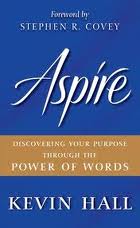
Lesson #10 in an Eleven-part series based on Aspire by Kevin Hall

Are we half-baked or are we well done? 
Do we go all out or do we try with half a heart?
Are we do-or-die people or are we “also ran” people?

Ollin people go for the gold.  No half-heartedness found here.  They demonstrate keen focus, energy, and drive.  If an Ollin person somehow falls short, it won’t be for lack of trying.  Half-heartedness is truly only half of what an Ollin person gives.


They may reach the end of the charge and be exhausted, drained, spent and tired, and they may have to be carried off the field, but Ollin people give their all.  They run, they climb, they strain, and they go where no man has gone before.  Ollin people give everything for the cause.

That is Ollin.

Ollin, pronounced All-in is all of this and more.  An Ollin person puts all of his or her weight behind whatever it is they choose to do.  It’s all about go, do, strive and win.

A bit of word history:  Stemming from the ancient Nahuatl language, “Ollin” is derived from “yollotl” meaning heart and “yolistli” meaning lifeOllin means ‘to move and act now with all your heart’.


Ollin is also connected to “opportunity”.  The root word is “port”, meaning the entryway by water into a city or place of business.  Only those who recognized the opening could take advantage of the open port.  So, Ollin people not only go and strive but they also recognize openings, passageways to other opportunities awaiting their discovery.


I love the analogy that Kevin uses here.  “When an earthquake or great storm shook the earth, the ancient Aztecs described such power by using the word ‘Ollin.’  The storm was giving everything it had and then some.”

Ollin is power.  It expresses an immense depth that conveys intense and immediate movement.  Ollin isn’t something you do part time.  You practice it every day of your life.

Confucius, the great Chinese philosopher, said, “Wherever you go, go with all your heart.”  That is Ollin.

When we practice Ollin we leave our comfort zone.  We go all out.  We get into the thick of things with total commitment.  

May we practice Ollin in the important relationships and activities of our lives.  May we be present, may we be focused, and may we be Ollin when it matters the most.


P Michael Biggs
Inspiration in Sight
One Word at a Time

Wednesday, May 9, 2012

Coach-The Words of Aspire (#9 of 11)


Coach
Lesson #9 in an Eleven-part series based on Aspire by Kevin Hall


The word “Coach” is prevalent in today’s vernacular.  The old west had “stage coaches”, we travel in “coach class” on a train, and we sit in “coach class” on an airplane. 

We have “coaches” in sports, and today the in-vogue idea is to have personal coaches in all areas of our lives.  Harvey McKay, famous for the book Swim with the Sharks” has about a dozen personal coaches.  He has a coach for tennis, ping pong, running, writing, business, golf, and a few others. 

Coach means this:  Something or someone who carries a valued person from where they are to where they want to be.

Our American term is “Coach.”
In Japan it is a “Sensei”.
Sanskrit:  “Guru”
Tibet:       “Lama”
Italy:        “Maestro”
France:    “Tutor”
England:  “Guide”
Greece:   “Mentor”

All of these words describe the same experience:  One who goes before and shows the way.  Coaches guide us, steer us, lead us, teach us, and equip us.  They help us avoid pitfalls, muddy places, and dangerous bends in the road.  They help us avoid lousy habits that slow our growth, dead ends that lead nowhere and a thousand other traps in life.

Coaches come in all sizes and shapes, and with a wide scope of labels:  mother, father, teacher, guide, mentor, friend, professor, just to name a few, and the wonderful thing is they all have carried us to places we could not get to on our own. 

We need coaches. 

Ah, we do indeed need coaches. 

Coaches are teachers.  They see potential where it is but a small, seemingly insignificant bud poking its head through the dirt.  Oh yes, the potential is there.  It is quietly growing and waiting.  Waiting and growing.  It’s just looking for an opportunity, a nudge, a dose of instruction.  It just needs to be nudged in the right direction and taught the essentials.

Teachers show the way.  They model the how and explain the why. 

Kevin sums up the idea of a coach in this way:  You can’t teach what you don’t know, and you can’t guide where you don’t go.

When you light someone else’s path, you see your own more clearly. 

What do you say?  As for me, I want to be a coach.  I’ll hold the light for both of us.  Together we will tread the path to better - together.


P Michael Biggs
Encouragement in Sight
One Word at a Time


Tuesday, May 1, 2012

EMPATHY - The Words of Aspire (#8 of 11)


Empathy
Lesson #8 in an Eleven-part series based on Aspire by Kevin Hall

Kevin’s word-smith friend Arthur helps us better understand our word for this week.  The word is Empathy.  Here is how Arthur puts it:


“Empathy is another word that springs from the soil.  ‘Pathy’ comes from path, and ‘em’ is in.  Empathy is walking the path of another.”  If you don’t get on another’s path, if you don’t go where he or she has gone, you can’t truly understand what that person is experiencing.”


Empathy!  What a beautiful mix of the strong and the tender. 

It is strong in the sense that empathy is a strong action.  When you show empathy you move from where you are to a position of support.  Support is all about strength. 
You are giving someone a measure of your strength. 


It is tender in the sense of being able to understanding another person on a deeper level.  Understanding is a soft skill.  It is less about the words said and more about what the heart hears and feels and understands.

When we demonstrate ‘empathy’ it is a form of communicating.  “Communication” comes from the Latin ‘communicare’, which means to share in common.  To share in common requires coming together on common ground.”


Top sales people have an amazing ability to anticipate the needs of others.  They learn the art of being able to talk about benefits - what the product or service can do for the customer.  The old sales training adage is “speak in terms of your customer’s wants and needs”.  That is empathy.


I love what Stephen R. Covey teaches.  “Nothing is more validating and affirming than feeling understood.”  He goes on to say “Empathy is to the heart what air is to the body.”  


We all want and need to be understood.  It is a fundamental wish of every human heart.  Understand means to stand among.  It doesn’t mean to stand beneath or below.  It means to stand with.


How many individuals in our daily path need a good demonstration of empathy from us? 

Let’s spread a bit of “understanding” this week.


P Michael Biggs
Encouragement In-Sight
One Word at a Time


Tuesday, April 24, 2012

Inspire-The Words of Aspire (#7 of 11)


Inspire
Lesson #7 in an Eleven-part series based on Aspire by Kevin Hall

In everyone’s life, at some time,
our inner fire goes out.
It is then burst into flame
by an encounter
with another human being.
- Albert Schweitzer –

Our 7th word in this remarkable book is the word INSPIRE.”  I love this particular word for it is near and dear to my own heart and the way I attempt to live my own life. 

When someone inspires you, a door is opened before you; a doorway to accomplishing the impossible.  It was closed before.  Now, with inspiration, you see possibilities that were once hidden.  Walk through that open door and see what awaits you on the other side.

In “Afternoons with Arthur”, Kevin is taught the meaning of inspire.  The conversation went like this: 

“The meaning of the word ‘inspire,’ comes from the Latin ‘inspirare,’  ‘Spirare,’ Arthur instructed, means to breathe, and ‘in’ implies intoTo inspire is to breathe into.”

Arthur further points out that the word “encourage” is closely associated with the word inspire. 

“Coeur” in the Romance languages means heart.  When you “encourage”, you add to someone’s heart


I have often used Maya Angelou’s quote in my blogs.  I found this quote in Kevin’s book “Aspire.”  Listen to this.


“People will forget what you said;
people will forget what you did;
but people will never forget how you made them feel.”


What power we have with the words we use.


When you inspire and praise someone it is as if you are leading them “out of a cold, harsh dungeon into a warm garment of praise.”


When we praise someone, we add value to them, to their lives and to their dream.”  This is one of the profound quotes from Kevin’s book, and I love this thought.  I am all about lifting people up.  My life’s mission is to offer Up-Words to everyone I meet through my writing and speaking. 

To paraphrase Kevin’s words:
“We get to choose
To heal or wound
To inspire or expire
To praise or criticize
To appreciate or depreciate
To encourage or discourage
To focus on strengths or focus on weaknesses”


I want to be an inspiration to everyone with whom I come into contact.  I want to offer an opportunity for good feelings, good will and good thoughts.  I want to show you a bigger picture of who you can become, and what you can become.

I want to inspire you.

And then

Then my hope and prayer is that you too will Inspire someone in return.


Thursday, April 19, 2012

HUMILITY-The Words of Aspire (#6 of 11)


Humility
Lesson #6 in an Eleven-part series based on Aspire by Kevin Hall

What is humility? 

Humility is all about being teachable and coachable.  It is not the often misrepresented stance of slack shoulders, drooping head, and downcast expression of a loser.  Humility is not losing at all.  It is the opposite.  Humility is learning, being teachable, and being coachable.  Humility is ultimately winning.

Thoughts from Kevin:  “The origin of “humility” is the Latin word “humus”, meaning soil, specifically rich, dark, organic soil.  When a seed is planted in fertile soil, it transforms into something far greater.  It is the giant oak awaiting in the acorn, or the next great idea read in a book by a hungry student. 

“Humility produces growth.  When we develop our gifts, we in effect unwrap and unfold them for the benefit of all, including ourselves.”

I love Kevin’s thoughts on the word “success”. “Success comes from the Latin “succeder” and means to come up through.  The middle part of the word, “cede,” is an offshoot of “seed”.  When a seed pushes through the dirt, or humus, into the daylight, it follows a path of success and succession.  To come-up-through is to succeed.   We plant seeds of success by getting grounded and rooted in humility.”

In Kevin’s “Afternoon with Arthur”, Arthur talks about the word “Mastery.” He uses the analogy of a person learning a skill.  At first he is an ‘apprentice’.  An apprentice is nothing more than a “learner.”  It comes from the French word “apprendre,” which means to learn.

When one wished to learn a trade, he would find a master in his village to teach him the skills necessary for his chosen vocation.  After learning all he could from the local master, the apprentice would then travel to another village and become a student of another master teacher, thus the term ‘journeyman’. 

As the apprentice gained skill and a reputation for his craftsmanship, he would eventually become a ‘master’ himself.  And then the cycle would start all over again, with this new master teaching his own apprentice. 

Arthur so poignantly points out:  “But a master never stops learning.  That is the essential ingredient of humility.” 

A person of humility is ever the learner

A person of humility is ever the student

If you study the top achievers in any field, you will note that the people on top are constant learners. 

Earners are Learners!  It’s as simple as that.

Kevin so succinctly puts the crowning touch on our thoughts with this statement:  “We can’t influence until we’ve been influenced, and we can’t change the world until we are changed.  And the path to being changed is by being humble by being teachable.” 


A master never stops learning.

Of what are you a master?

How is your humility factor?

Let’s state it again:  Humility is all about being teachable and coachable.  

Thank you Kevin Hall.


Thursday, April 12, 2012

Sapere Vedere - The Words of Aspire (#5 of 11)


Sapere Vedere
Lesson #5 in an Eleven-part series based on Aspire by Kevin Hall


What a wonderful word – Sapere Vedere.  It feels good to say it. 


If you struggle with the enunciation, as I did at first, try this:
sah-Pare-ay-veh-DARE-ay


A simple meaning is this:  Learning to see beyond the clouds.

Breaking it down further, it looks like this: 
Sapere means knowing how
Vedere means to see

Sapere Vedere is knowing how to see.

When growing up in Tennessee, I often heard this phrase:  “I’ll cross that bridge when I come to it.”

Kevin says, “Those with sapere vedere say ‘I’ll see that bridge before I cross it’.”


Another way to phrase this is:  Believing is seeing.

One of my favorite quotes hangs on my office wall –

Only those who can see the invisible can accomplish the impossible.


Card Walker, former president of the Disney Corporation was attending the grand opening ceremony for Epcot Center.  During the ceremony, he whispered to Lillian Disney, Walt’s wife, and said, “I wish Walt could have lived to see this sight.”

Lillian response was:  “Oh, he did.  He saw everything just as it is today.”
Walt Disney was a visionary legend.  He could see things in his mind’s eye that were months and years into the future.  He dreamed big and in living color, with detail.

Walt Disney had Sapere Vedere.

Kevin quotes Myles Munroe, author of “The Principles and Power of Vision” with this thought: 

“Sight is a function of the eyes; vision is a function of the heart.
Vision sets you free from the limitation of what the eyes can see
and allows you to enter into the liberty of what the heart can feel.
Never let your eyes determine what your heart believes.

Never let your eyes determine what your heart believes!

That is as profound as it gets, my friend. 

Sapere Vedere, vision, sight, insight – it all speaks of faith.  Faith in our selves, in our dreams, in our vision of a life to come. 

And of course, for those of us who embrace a faith-based religion, we are all over the faith concept. We are people of faith, we have faith, we demonstrate faith, and we live a life of faith. 
Our faith is in the God of the universe.

I guess that means God was the original example of Sapere Vedere.

In Kevin’s afternoon visit with Arthur, he is tutored on a deeper level with this insight.  Arthur says, “Wisdom is knowing what we saw. Vision is knowing what we see.  And sapere vedere is knowing how to see.”

In the book of Proverbs, there is a verse that says, “Where there is no vision, the people perish.” 

Arthur continues, “With vision, people look ahead with confidence.  “Confidence” means to go with faith.  Clear vision allows us to proceed with faith in ourselves.”


Leonardo da Vinci said, “May your work be in keeping with your purpose.”

Purpose and vision.  They go hand in hand, don’t they?

My vision gives me purpose.  My purpose becomes my vision. 

In closing, I’ll borrow from Kevin’s words again.

“The two most important days of our life are the day we were born and the day we discover what we were born to do.” 

What were you born to do?
What is your purpose?
How is your vision?


May we all learn to see beyond the clouds.

Thursday, April 5, 2012

PASSION - The Words of Aspire (#4of 11)


PASSION
Lesson #4 in an Eleven-part series based on Aspire by Kevin Hall


Kevin hands us an often tossed-about word.  The word is “PASSION.”

It’s a good word, an important word. 

Passion has good intentions.  It sounds great rolling off our tongues in conversation.  “I have a passion to do we say. 

And then comes the doing.  Then comes the test of our passion.  Passion will either bring us all the way to the end, or we stop short.

Passion is paying a price.  Kevin says, “When one discovers what he/she is willing to pay a price for, then we have discovered our life’s mission and purpose.  Passion is being willing to suffer for what you love.”


“Suffering for what you love.”


Passion sometimes hurts.  It’s ugly.  It’s smelly.  It’s painful.  It makes one cry. 

But oh, the joy when passion finally sees the finish line! 


When the end of the trail is at the next turn, passion pays off.  Passion in the beginning is easy.  We begin our journey mostly on adrenalin. 

But in the middle of our dream, where is our passion?  Where did it go? 

Where is our passion when the big hills of life suddenly appear? 
Where is passion when we face thousands of crickets crawling all over us?
Where is passion when the heat of the day beats down on us?
Where is passion when the chilly wind of winter blows upon our face?

Where is passion then?

Kevin relates a part of Chad Hymas’ story in this chapter.  Chad was a strong, robust young farmer/rancher until a one-ton bale of hay fell on him, paralyzing him from the chest down. 

When something like this happens, you don’t run marathons, and you don’t earn an income.  Chad had to learn every functional skill all over again, except his ability to talk. 

Was it frustrating?
Was it fun?
Was it a tough journey?

Yes.
No!
Yes!


Chad decided to become a motivational speaker.  He had a story to tell, but he needed to add to his story, so he chose a seemingly impossible task to tackle.  He decided to ride 513 miles from St. Lake City to Las Vegas – on a three-wheeled bike.  At this point in his recovery, Chad had learned some amazing skills of self-care.  He relearned how to take care of most of his daily personal needs.

But he had a passion to do more. 

So off he rode one hot July morning.

The beginning of his trail was easy – maybe even fun.  Friends lined the thoroughfare, the TV cameras were out, and Chad could hear cheers and words of encouragement as he pedaled along. 

And then came the middle of his passion.  The crowds and cameras were gone. 

Along came the heat of the day.
Along came the crickets.
Along came discouragement, despair, and fatigue.

But he had passion.

He had passion … and he made it to the end.  After 513 miles of mostly agony, Chad pedaled into Las Vegas to the cheers of his family, and the hoots and hollers of the throngs of strangers who came from inside the casinos to applaud as he rolled up The Strip in Las Vegas. 

They cheered because he had passion, and it carried him all the way to the end of the trail. 

Wow!  What an encouraging story.  What passion! 

You really must read this book. 
I received an email from Chad a few weeks ago.  One week later, it hit me that Chad wrote this to me personally, and he is a certified quadriplegic.  He typed that two-sentence message one character at a time, and it took him three times as long to do that as it takes me to type a 50-word paragraph. 

The man is amazing. 

He is PASSION personified.

He had a goal, a dream, he set a plan in motion, and he won.

What is your goal, your dream, your mission?

How is your passion?

Is it stretching you?

Kevin notes in his Journal Thoughts – “Mission” means to be sent forth.  I will take care to do what I was meant and sent forth to do.

Chad’s mission was to become a motivational speaker and change lives by telling his story as only he could tell it.

What is your passion?

Go forth, with passion!